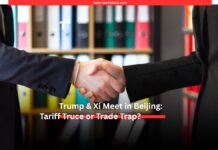







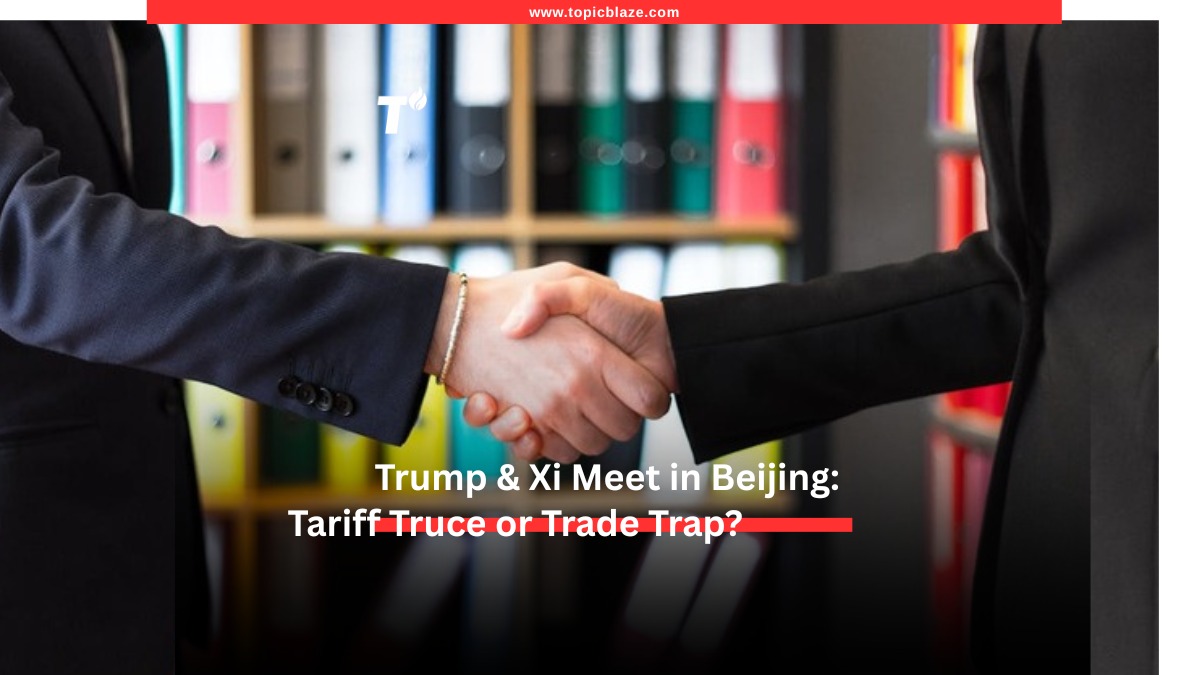
In the most consequential diplomatic meeting of his second term, President Donald Trump sat across from Chinese President Xi Jinping at the Great Hall of the People in Beijing on May 14, 2026 — and walked away claiming victory. The summit, Trump’s first visit to China since leaving office in 2021, produced headlines about Boeing jets and soybean purchases. But the bigger story may be the warning Xi delivered on Taiwan: handle it wrong, and there will be “clashes and even conflicts.”
What Did Trump and Xi Actually Agree On?
Trump emerged from the summit touting “fantastic trade deals for both countries.” The headline commitments, according to the White House, included China agreeing to purchase 200 Boeing 737 jets — exceeding Boeing’s own expectation of 150 — as well as increased purchases of American soybeans and liquefied natural gas. Trump also announced the formation of a bilateral US-China Trade and Investment Council, which will meet quarterly to identify new areas of commercial cooperation.
However, the Chinese side’s account of the meeting was notably different. Beijing’s Ministry of Foreign Affairs statement made no mention of the aircraft deal or the agricultural purchases. Instead, it emphasised the agreement to develop a “constructive China-US relationship of strategic stability” — a framework Xi said China would treat as its guiding approach to the relationship for the next three years and beyond. The divergence in the readouts has left analysts scrambling to determine what was actually agreed upon.
“Both leaders left Beijing with what their domestic audiences wanted to hear. Trump got trade deals; Xi got a stability framework. Whether either actually holds is a different matter entirely. The details — and the devil — will emerge in the weeks ahead.”
— Bonnie Glaser, Director, Asia Program, German Marshall Fund of the United States
Trade experts note that China has made similar purchasing commitments before — most famously the $200 billion Phase One trade deal of 2020 — and consistently fallen short of the targets. The soybean and energy commitments have not been independently verified by Chinese state media, and Beijing’s commerce ministry declined to confirm the numbers cited by Washington.
The Taiwan Warning No One Is Talking About
Buried beneath the trade deal headlines is the most significant statement from the entire summit. According to Chinese state media, Xi told Trump directly that if the Taiwan issue is not “handled properly,” it could lead to “clashes and even conflicts” between the world’s two most powerful militaries. It was an unusually blunt formulation — a warning delivered face-to-face to a sitting US president, framed not as a hypothetical but as a near-certainty if Washington crosses Beijing’s red lines.
The remark takes on added weight given the current context: the US military is actively engaged in combat operations in the Persian Gulf against Iran, the USS Gerald R. Ford carrier strike group is conducting freedom of navigation operations in the South China Sea, and Taiwan’s defence ministry has reported a 40% increase in Chinese military aircraft incursions into Taiwan’s Air Defence Identification Zone in the first quarter of 2026. Xi’s message to Trump appeared carefully calibrated: secure American acknowledgment of Chinese sovereignty interests in exchange for commercial cooperation on trade.
Trump, for his part, did not publicly address the Taiwan warning at the post-summit press conference, pivoting instead to praise for Xi and enthusiasm about the Boeing deal. It is unclear what private assurances, if any, were exchanged. The White House stated only that Taiwan was “discussed” as part of a broader conversation about regional stability. The omission has alarmed Taiwan’s government, which issued a statement reaffirming its commitment to democratic self-determination and requesting urgent consultations with Washington.

What This Means For You
The Beijing summit has real consequences for American consumers and businesses. If the Boeing and soybean deals materialise, US manufacturers and farmers will see a meaningful boost — Boeing shares surged 4.7% on the announcement. For American importers, the summit’s mood music suggests the worst of the tariff war may be over, at least temporarily; the ongoing 145% tariff regime was not discussed at the summit, but the bilateral stability framework creates a diplomatic channel for future reductions. The Taiwan warning, however, is the story that will matter most in the long run. Any escalation in the Taiwan Strait would trigger a global economic crisis that would make the Iran-Hormuz disruption look modest. For context on how US-China trade tensions have evolved, see our earlier coverage of Trump’s 25% EU Car Tariff and the broader trade war picture.
Sources
- CBS News — Trump touts ‘fantastic trade deals’ with Xi
- CNBC — Trump-Xi summit: The 3 big takeaways
- Al Jazeera — Trump-Xi summit: China, US disagree on what they agreed on