












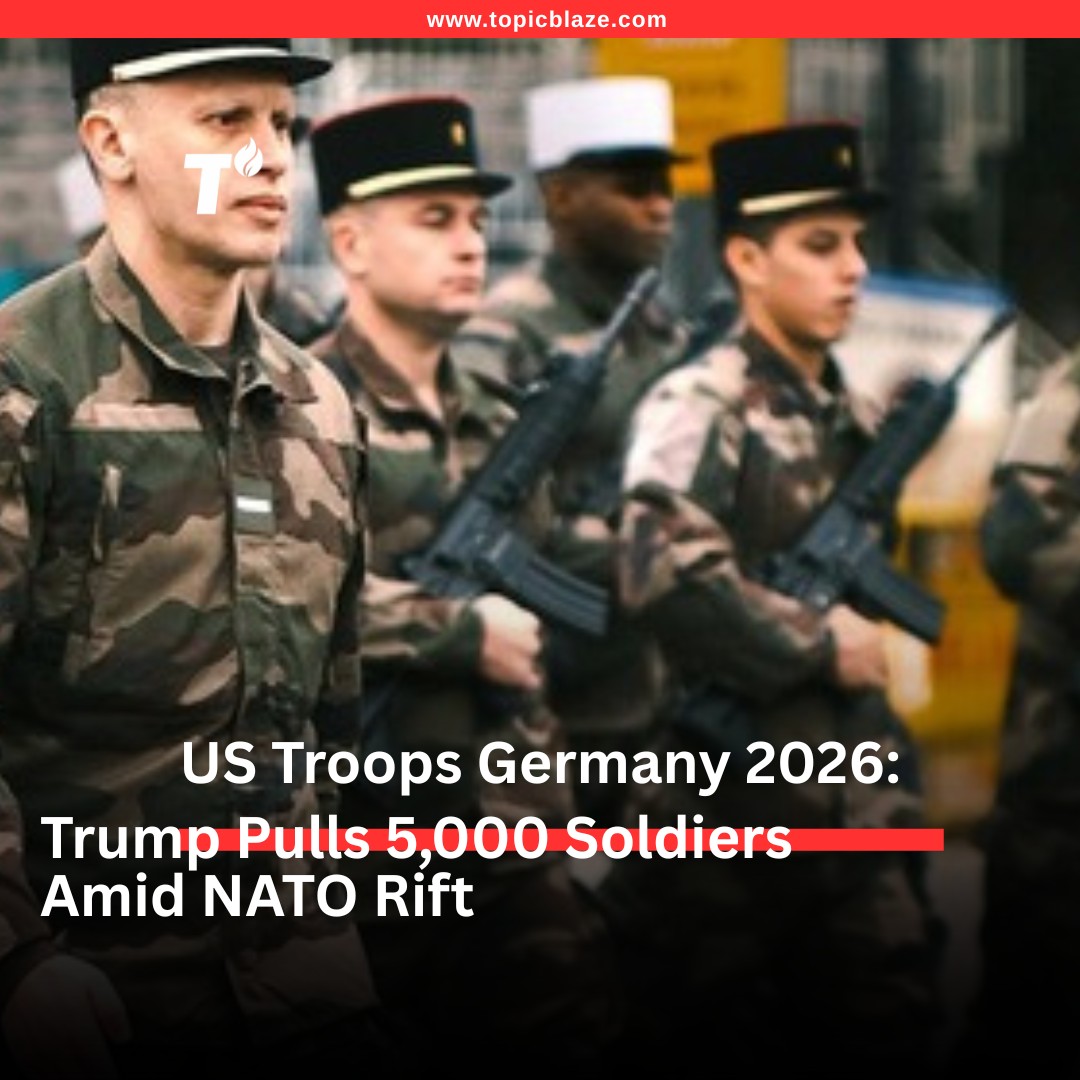
The United States is pulling approximately 5,000 troops out of Germany — and President Trump says that’s just the beginning. In a move that has rattled NATO allies from Berlin to Rome, the Pentagon confirmed Friday that American forces will withdraw from Germany over the next six to twelve months, fulfilling Trump’s threat as his bitter feud with German Chancellor Friedrich Merz over the Iran war reaches a breaking point.
Why Is the US Withdrawing Troops From Germany?
The trigger was a public clash between Trump and Chancellor Merz. Earlier this week, Merz told reporters that the United States was being “humiliated” by Iranian leadership and blasted Washington for lacking any coherent strategy in the Iran war. Trump, who has never tolerated public criticism from allies, responded by threatening troop cuts — and then followed through. The Pentagon announcement on Friday confirmed 5,000 service members would leave over the next six to twelve months, cutting 14% of the 36,000 U.S. troops currently stationed in Germany.
But Trump quickly made clear 5,000 was just the opening move. When asked on Saturday about the rationale, Trump didn’t elaborate on strategy — he simply said “We’re going to cut way down. And we’re cutting a lot further than 5,000.” The statement sent shockwaves through European defense ministries, with analysts warning that Spain and Italy could be next. NATO’s fragility has been exposed repeatedly this year, and this withdrawal could prove the alliance’s most serious test since the Cold War.
“Withdrawing American troops from Germany while actively at war in the Middle East sends a catastrophic signal to Vladimir Putin. It suggests America is either distracted or disengaged from European security — and both interpretations are dangerous.”
— Dr. Katarina Bauer, Senior Fellow, European Council on Foreign Relations
The Republican response has been unusually sharp. Senators Roger Wicker of Mississippi and Rep. Mike Rogers of Alabama — chairmen of the Senate and House Armed Services Committees — released a joint statement saying they are “very concerned” about the decision and warned it risked “undermining deterrence and sending the wrong signal to Vladimir Putin.” For two senior Republicans to publicly break with a Trump decision is extraordinarily rare, signaling just how significant the security implications are.
What Does This Mean for NATO and European Security?
Germany houses some of the U.S. military’s most critical European infrastructure — including Ramstein Air Base, which serves as a key command hub for operations across Europe, Africa, and the Middle East. A significant drawdown doesn’t just reduce troop numbers; it degrades the command-and-control architecture that underpins NATO’s entire eastern flank defense against Russia. NATO spokesperson Allison Hart said the bloc is “working with the U.S. to understand the details of their decision,” a diplomatically restrained way of saying allies were blindsided. The Iran war has already strained transatlantic relationships, and this withdrawal threatens to fracture them further.
Germany’s response has been measured but alarmed. Officials said the withdrawal was “anticipated” given Trump’s previous statements, but acknowledged it would force Germany to accelerate its own defense spending and rearmament programs — a major strategic realignment for a country that has historically relied on American security guarantees for eight decades.

What This Means For You
For American taxpayers and citizens, this withdrawal represents a fundamental shift in how the United States conducts its global military posture. Less U.S. presence in Europe means European NATO members — who pay into a collective defense structure — will need to spend more and rely on America less. For global markets, a weakening of NATO cohesion during an active Middle East war raises geopolitical risk premiums across the board. Energy prices, already elevated due to the Hormuz crisis, could climb further if instability spreads. This is no longer just a diplomatic spat — it’s a restructuring of the post-World War II security order.
Sources
- CNN Politics — Trump threatens more cuts after US announces withdrawal of 5,000 troops from Germany
- NPR — U.S. to withdraw 5,000 troops from Germany in next 6-12 months
- CNBC — Trump says U.S. will reduce troops in Germany ‘a lot further’ than 5,000