













The International Monetary Fund has cut its global growth forecast to 2.8% for 2026 — the weakest outlook since the pandemic recovery — as three forces collide at once: a $313 trillion global debt pile, resurgent trade barriers, and inflation that refuses to fully retreat.
For investors, policymakers, and ordinary households, the consequences are already visible. Borrowing costs remain elevated. Consumer confidence in major economies is fragile. And the geopolitical fault lines that defined 2024 and 2025 have become permanent features of the economic landscape.
The Debt Trap
Global debt hit a record $313 trillion in late 2025, according to the Institute of International Finance — equivalent to 333% of world GDP. The United States alone is running a federal deficit of $1.9 trillion, fueling concerns about long-term fiscal sustainability.
In emerging markets, the picture is even more acute. Countries that borrowed heavily during the low-rate era of 2020–2022 are now refinancing at punishingly high interest rates. Sri Lanka, Pakistan, and Egypt have all needed IMF bailouts. More are watching the clock.
“The convergence of debt pressure, trade fragmentation, and sticky inflation creates a uniquely difficult environment for policymakers. There are no easy levers left to pull.”— Dr. Elena Vasquez, Chief Economist, IMF Research Department
Trade Wars Bite Again
The return of broad tariff regimes — first by the United States, then in retaliation by the EU and China — has fragmented global supply chains in ways that economists warned about but hoped to avoid. World trade volume grew by just 1.7% in 2025, its slowest pace in a decade outside of a recession year.
China’s economy is growing at 4.5%, below the government’s 5% target, as weak domestic consumption and a prolonged property sector correction drag on output. Beijing has deployed stimulus — but each round delivers diminishing returns.
Meanwhile, Southeast Asian nations like Vietnam, Indonesia, and India are emerging as net winners, absorbing manufacturing relocating out of China. Vietnam’s export growth hit 12% in Q4 2025.
Inflation’s Stubborn Return
Central banks declared victory over inflation too early. Core inflation in the US re-accelerated to 3.4% by early 2026, driven by services, housing costs, and a new round of tariff-driven goods price increases.
The Federal Reserve paused its rate-cutting cycle in February 2026 — a decision that rattled equity markets and renewed debate about whether rates will stay “higher for longer” well into 2027.
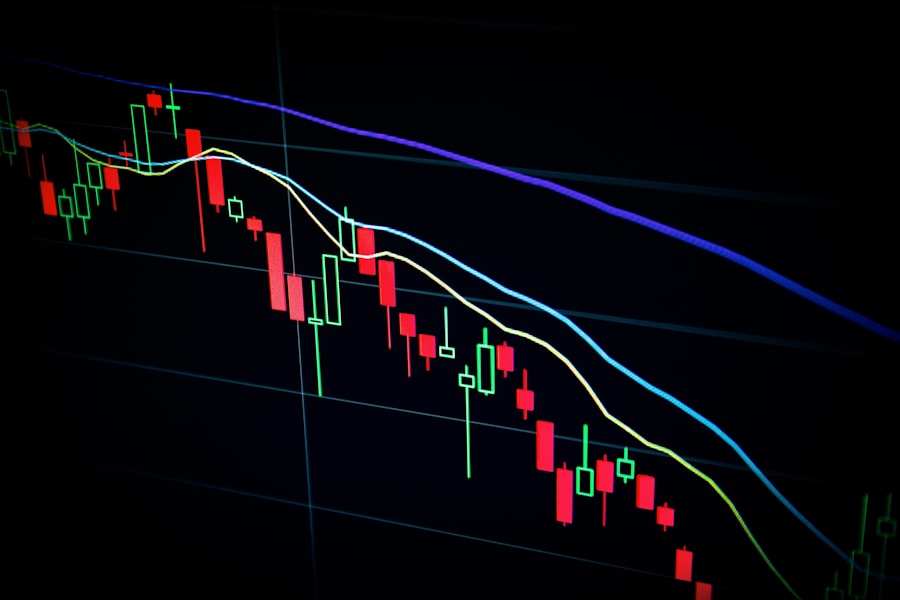
The Bank of England and European Central Bank face the same dilemma: cut too soon and inflation rebounds; hold too long and recession risk rises. Neither path is clean.
Winners and Losers
Not every economy is struggling. India is growing at 6.4%, cementing its position as the world’s fastest-growing major economy. Its domestic consumption base, young workforce, and services-driven growth model have insulated it from some of the headwinds hammering export-dependent nations.
Oil exporters in the Gulf — Saudi Arabia, UAE, Kuwait — are benefiting from elevated energy prices and using windfall revenues to accelerate economic diversification. Saudi Arabia’s non-oil GDP grew by 4.2% in 2025.
At the other end: Germany is technically in recession for the third consecutive year. High energy costs, weak Chinese demand for exports, and structural rigidities in its industrial base have combined to create what economists are calling a “slow-motion crisis.”
What Investors Are Watching
Financial markets are pricing in a soft landing — but the consensus is fragile. The S&P 500 is up 6% year-to-date, but the rally is narrow, driven primarily by AI-linked technology stocks.
Bond markets tell a more cautious story. The US 10-year Treasury yield remains above 4.5%, reflecting persistent inflation uncertainty and concerns about long-term fiscal deficits.
“The market is trading on hope, not fundamentals. One bad inflation print or a geopolitical shock could reprice everything very fast.”— Marcus Lin, Chief Investment Strategist, Meridian Asset Management
The Bottom Line
The global economy in 2026 is not in freefall — but the comfortable post-pandemic recovery narrative is officially over. Growth is slower, debt is higher, trade is more fractured, and the monetary policy toolbox is depleted relative to where it was five years ago.
The economies that will fare best are those with strong domestic demand, fiscal room to maneuver, and the agility to adapt to a world where globalization has permanently shifted gear.
For the latest global economic data, see the IMF World Economic Outlook and the World Bank Global Economic Prospects.