












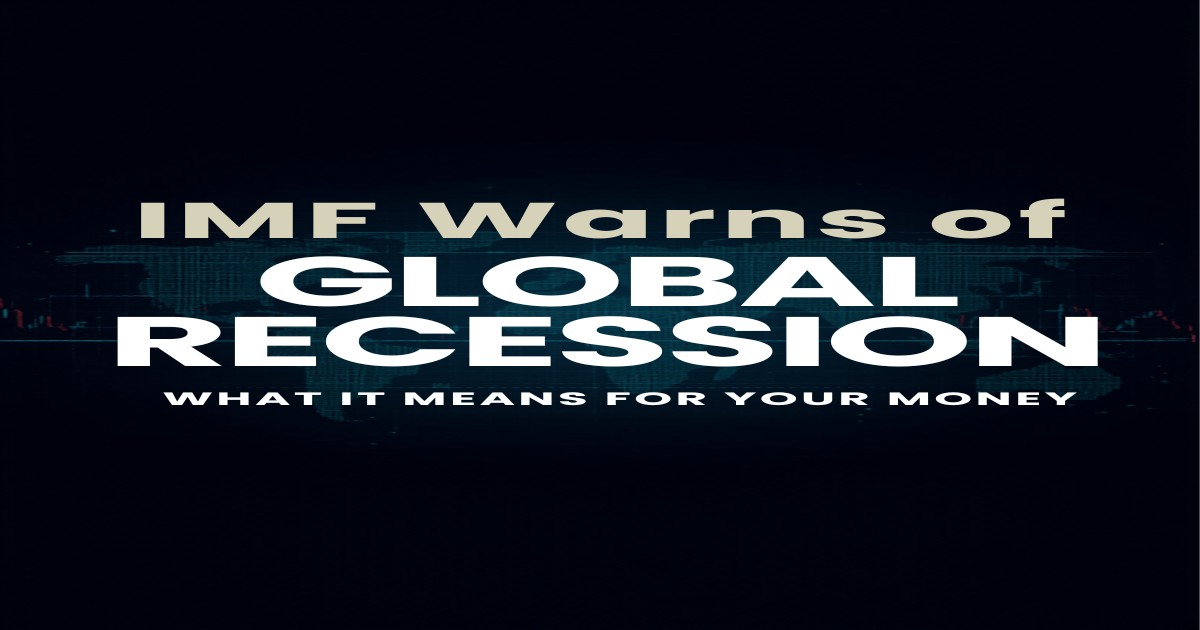
The world’s economic referee just issued its starkest warning in years. The International Monetary Fund slashed its global growth forecast to 2.8% for 2026 — the lowest since the COVID recession of 2020 — and warned that trade war escalation could push multiple major economies into outright contraction.
What the IMF Actually Said
In its April 2026 World Economic Outlook, the IMF cut the US growth forecast from 2.7% to 1.8%, reduced the eurozone outlook to 0.8%, and lowered China’s projected expansion to 4.1%. The fund specifically named US tariff policies as the primary driver of the downgrade, estimating that current trade restrictions will cost the global economy $1.4 trillion by 2027. “The global economy is at a critical juncture,” said IMF Chief Economist Pierre-Olivier Gourinchas. “Escalating trade tensions are creating uncertainty that is freezing business investment and disrupting supply chains built over decades.”
Which Countries Are Most at Risk
Germany, already in a technical recession after two consecutive quarters of contraction, faces a third negative quarter if export orders continue declining. The UK is forecast to grow just 0.6% in 2026, down from 1.4% previously. Mexico, deeply integrated into US supply chains, has seen its forecast cut to 1.2% from 2.1%. Emerging market economies face a double bind: slower global growth reduces demand for their exports while higher US interest rate expectations strengthen the dollar, making their dollar-denominated debts more expensive to service.
What Happens to the US Economy?
At 1.8% projected growth, the US economy is not in recession territory — but the margin for error is thin. The Federal Reserve, caught between still-elevated inflation running at 3.4% year-over-year and slowing growth, faces an unenviable choice. “The Fed is in the toughest position it’s been in since 2008,” said Mohamed El-Erian, chief economic advisor at Allianz. “They’re threading a needle in a windstorm.” Cutting rates would stimulate growth but risk reigniting inflation. Holding steady risks tipping a fragile economy into contraction.
How Bad Could It Get?
The IMF outlined three scenarios. The base case — 2.8% growth — assumes current tariffs remain but don’t escalate. A downside scenario involving additional tariff rounds could reduce growth to 2.1%, a level that historically precedes widespread job losses in developing nations. A severe scenario involving financial market disruption could reduce growth to 1.5%, levels not seen since the Great Financial Crisis.
What This Means For You
Slower global growth affects Americans in ways both obvious and subtle. If the US economy continues to slow, expect hiring to soften in the second half of 2026 — particularly in manufacturing, logistics, and retail. Your 401(k) may face headwinds as corporate earnings projections are revised downward. The most practical advice right now: reduce unnecessary debt, build an emergency fund covering 4–6 months of expenses, and avoid major financial commitments based on current income stability assumptions. Stay informed with TopicBlaze’s daily economics coverage.