

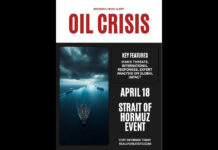














Wall Street’s most closely watched commodity is flirting with a number that would send shockwaves through the global economy: $100 a barrel. With Brent crude already up 18% this year and geopolitical tensions showing no signs of easing, analysts are increasingly asking not if oil will hit $100 — but when.
What the Data Actually Shows
Goldman Sachs revised its 12-month Brent crude forecast to $98 per barrel this week — its most bullish call in three years. The bank cited three converging factors: supply constraints from OPEC+ production cuts, stronger-than-expected demand from India and Southeast Asia, and the ongoing risk premium tied to Middle East tensions. Brent crude closed Thursday at $92.40 per barrel — up from $78.20 at the start of the year. West Texas Intermediate (WTI), the US benchmark, sits at $88.70. Both figures represent multi-year highs, and the momentum appears unbroken.
Why OPEC+ Holds the Cards
“OPEC+ has made it very clear — they are comfortable letting prices rise,” said Helima Croft, head of global commodity strategy at RBC Capital Markets. “They have fiscal breakeven prices to meet, and $100 oil solves a lot of their budget problems.” Saudi Arabia requires approximately $80/barrel to balance its national budget. Russia’s breakeven sits around $85. The cartel cut production by 1.2 million barrels per day in January and has signaled no reversal until at least Q3 2026.
The Demand Side of the Equation
India’s oil consumption grew 7.2% year-over-year in Q1 2026, surpassing forecasts. Indonesia, Vietnam, and the Philippines collectively added 380,000 barrels per day to global demand. The International Energy Agency now projects global oil demand will average 103.8 million barrels per day in 2026 — a new record. “We’re seeing the impact of a rapidly expanding middle class across Asia,” noted IEA Executive Director Fatih Birol. “These are people buying their first cars and air conditioners.”
The Iran Wildcard
Perhaps the single biggest variable right now is Iran. If a ceasefire deal is confirmed, Iranian oil exports could return to full capacity within 90 days, adding an estimated 1.5 million barrels per day to global supply — potentially knocking $10–$15 off the barrel price. Conversely, if talks collapse and the Strait of Hormuz becomes contested, Citigroup analysts warn prices could spike to $115–$120 per barrel within weeks.
What This Means For You
Every $10 increase in oil prices translates to approximately 25 cents more per gallon of gasoline. American drivers are already paying about $3.92 per gallon on average — if oil hits $100, expect that to climb past $4.30. Airlines are warning of fare increases; United and Delta have both disclosed that fuel costs are running significantly above their hedged positions. If you’re planning summer travel, consider booking now before fares rise further. Follow TopicBlaze for daily energy market updates.