















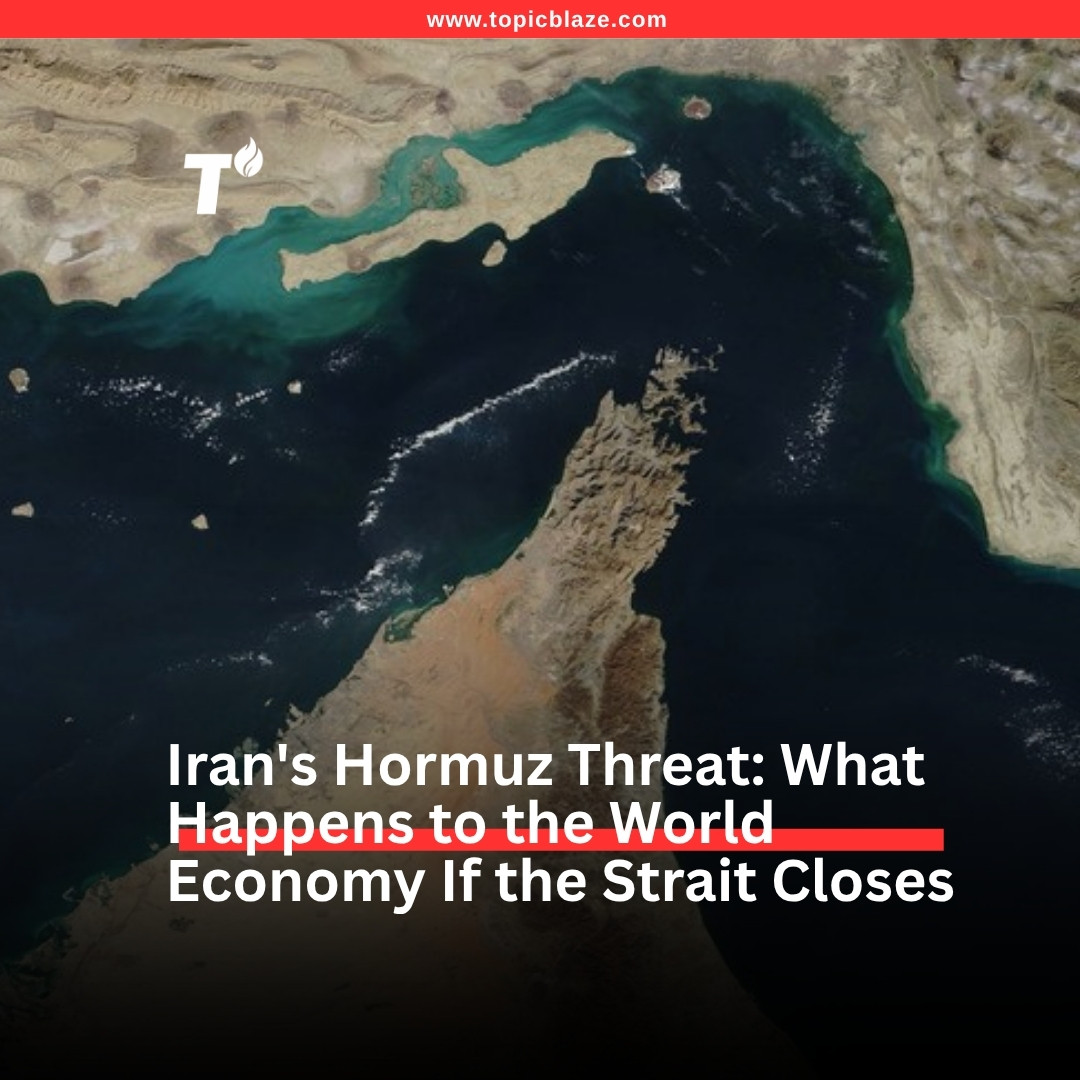
The Strait of Hormuz — a narrow waterway between Iran and Oman — is one of the most consequential chokepoints on the planet. Roughly 20 percent of the world’s oil and 20 percent of global liquefied natural gas pass through it daily. When Iranian officials this week renewed threats to close the strait in response to escalating U.S. and Israeli pressure over its nuclear program, markets moved immediately and sharply.
The threat is not new. Iran has invoked the possibility of closing Hormuz during nearly every major regional crisis over the past 40 years. But analysts say the current geopolitical context — a fragile ceasefire in Gaza, heightened tensions with Israel, and an unresolved nuclear standoff — makes this round of threats harder to dismiss than usual.
The economic consequences of even a partial or temporary closure would be severe. Oil prices, already elevated, would spike immediately — projections from Goldman Sachs and JPMorgan place a short-term disruption at $150 to $180 per barrel, with a prolonged closure potentially pushing prices above $200. The inflationary ripple effects would be felt in every economy that imports energy, from Europe to Southeast Asia.
If America and its allies continue down this path, Iran has every right to defend itself using all available options — including control over regional waterways.
— Iranian Foreign Ministry Spokesman Nasser Kanaani
The United States Navy has maintained a substantial presence in the Persian Gulf specifically to deter this scenario. The Fifth Fleet, headquartered in Bahrain, includes carrier strike groups and mine-countermeasure vessels capable of responding to an Iranian attempt to block the strait. Military analysts consider a full closure unlikely — the risks to Iran itself are enormous — but a partial harassment campaign, using mines, drones, or fast-attack boats, is considered more probable.
Saudi Arabia and the UAE have pipeline infrastructure designed to bypass Hormuz, but their combined alternative capacity falls well short of the daily throughput the strait handles. The gap would need to be filled by emergency strategic reserves — and those have limits.
The Hormuz question has always been a matter of when, not if, it would resurface.
For now, diplomats are working to prevent it from becoming a question of what next. The world’s economic stability, in no small part, depends on that effort succeeding.