













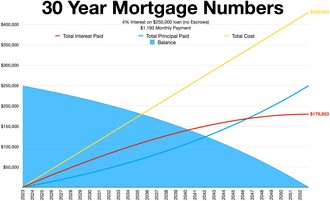
The numbers tell a story that is difficult to soften: the median American home now costs $435,000, mortgage rates remain near 7 percent, and the monthly payment on a median-priced home — at $3,200 — now represents more than 40 percent of the median American household’s gross monthly income. By any historical standard, housing affordability has never been worse in the post-World War II era.
The causes are well-documented and stubbornly persistent. A decade of underbuilding following the 2008 financial crisis left the country with a structural shortage estimated at 3.5 to 7 million units, depending on the methodology used. That shortage collided with a pandemic-era demand surge, rising construction costs, and the Federal Reserve’s most aggressive rate-hiking cycle in decades — a perfect storm for a market already under stress.
The consequences are rippling through American life in ways that extend far beyond housing itself. Workers can no longer afford to live near the jobs that need them, creating labor shortages in high-cost metro areas. Young adults are delaying marriage, childbearing, and family formation in part because they cannot achieve the housing stability that previous generations took as a baseline. Homelessness has reached record levels in cities from Los Angeles to New York to Phoenix.
This is not a market correction that will fix itself. This is a structural failure that requires structural solutions — and right now, there is no political will for those solutions at the federal level.
— Jenny Schuetz, Brookings Institution housing economist
The solutions most economists agree would help — relaxing single-family zoning laws to allow more density, streamlining permitting processes, expanding housing vouchers, and investing in public housing construction — are all politically contentious at the local level, where most housing decisions are made. The homeowners who dominate local politics have financial incentives to limit new supply, creating a structural barrier to reform that is difficult to overcome.
Some states are breaking through. California, Montana, and Florida have recently preempted local zoning restrictions in various ways, allowing more multifamily development near transit corridors. Early data suggests these reforms are working — permitting is up in the affected areas — but the pipeline from permit to completed unit takes years, and the crisis is acute now.
Housing is infrastructure. Like roads, water systems, and power grids, it requires long-term investment and planning that no single market cycle will provide.
The question is whether the political system can organize itself around that reality before the crisis deepens further — or whether America will continue to pay the price of inaction one overpriced apartment at a time.