










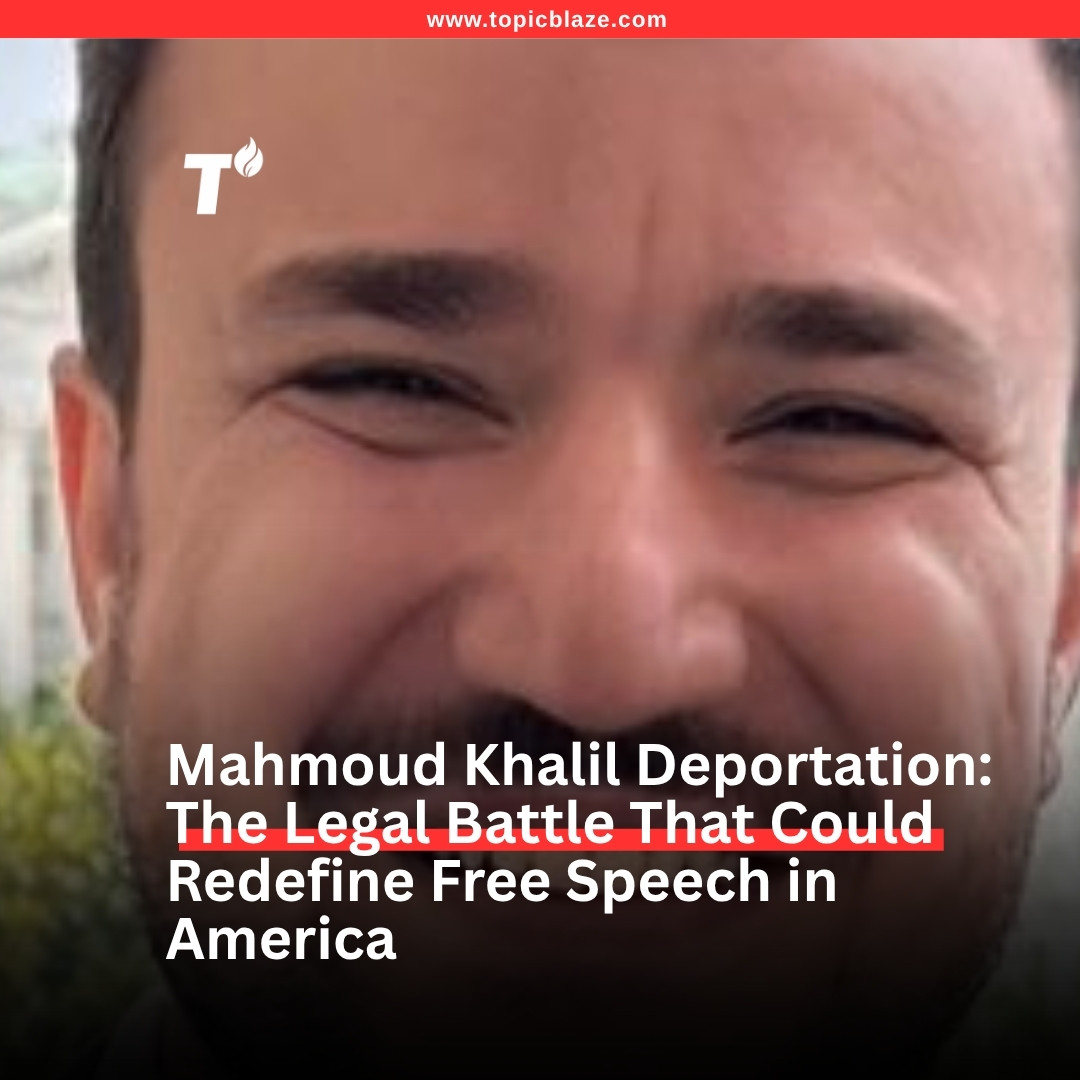
The name Mahmoud Khalil may not have been widely known a year ago. Today, it sits at the center of a legal and constitutional storm that some legal scholars are calling the most consequential free speech case of a generation. Khalil, a Palestinian-born activist and former Columbia University graduate student who holds permanent resident status in the United States, was detained by federal immigration authorities earlier this year and placed in deportation proceedings — not for any criminal conduct, but, the government has argued, for his political activities on campus.
The case has galvanized civil liberties organizations, immigration advocates, university faculty, and First Amendment attorneys across the country, who argue that the government is weaponizing immigration law to silence political dissent. At the same time, supporters of the administration argue that Khalil’s activism crossed from protected speech into activity that endangered campus safety and constituted material support for designated groups.
The government is essentially arguing that a green card holder can be deported for his political opinions. If that argument succeeds, it would mark the most significant rollback of First Amendment protections for non-citizens in decades.
— ACLU attorney Lee Gelernt, speaking to reporters outside federal court
At the heart of the case is a rarely invoked provision of immigration law that allows the government to deport non-citizens deemed to pose a threat to US foreign policy interests. Critics note that the provision was historically used against individuals with direct ties to terrorist organizations, not student activists. The administration’s decision to apply it to Khalil — who was involved in organizing campus protests against Israel’s military operations in Gaza — has drawn accusations of targeting constitutionally protected political speech.
Federal courts have so far issued mixed rulings. An initial injunction blocking the deportation was granted in March, but the administration appealed, and the case is now expected to reach the Supreme Court. Legal experts note that the outcome could have far-reaching implications not just for the approximately 13 million green card holders in the United States, but for the broader principle that constitutional protections apply to all persons on US soil regardless of citizenship status.
Whatever the courts ultimately decide, the Khalil case has already reshaped the conversation around campus protests, non-citizen rights, and the limits of government power over political speech.
It is a test case that neither the courts nor the public can afford to ignore — because the precedent it sets will define the boundaries of dissent in America for years to come.