












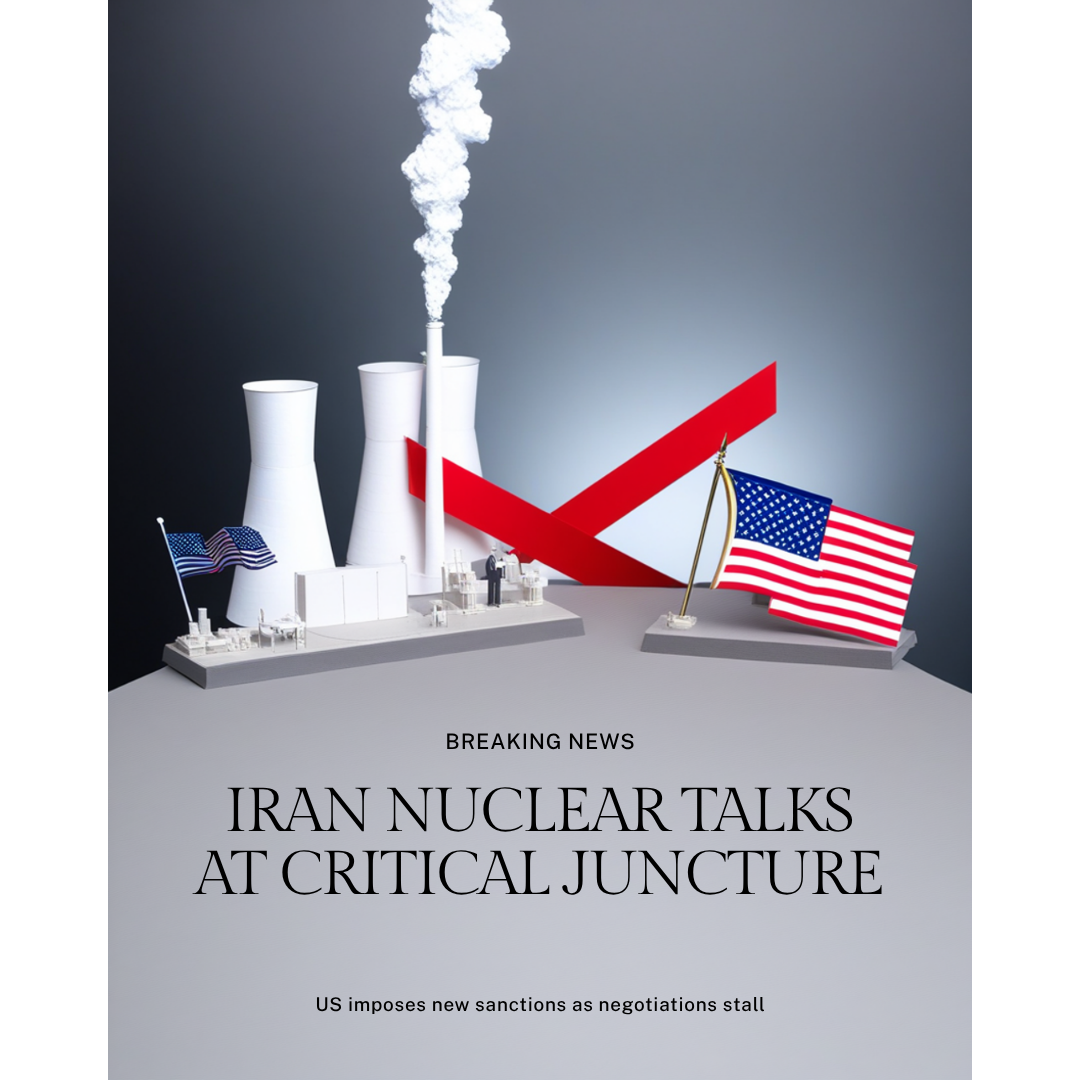
The United States has imposed its most sweeping sanctions package targeting Iran in five years — a move that diplomats say has effectively frozen the last remaining channel for nuclear negotiations and pushed the two countries further from a deal than at any point since the 2015 JCPOA collapsed.
Iran is now enriching uranium to 60% purity, just a technical step from weapons-grade, with a stockpile large enough to produce multiple nuclear devices if the decision were made. The window for a negotiated solution, many analysts warn, is closing fast.
The Talks That Keep Failing
Since the collapse of the original Joint Comprehensive Plan of Action (JCPOA) in 2018, there have been 12 rounds of formal and informal negotiations between the US, European powers, and Iran. None has produced a durable agreement.
The core problem is trust — or the absence of it. Iran points to the US withdrawal from the 2015 deal under President Trump as evidence that no American agreement is worth the paper it’s signed on. Washington points to Iran’s decision to accelerate enrichment above JCPOA limits as evidence that Tehran was never negotiating in good faith.
Each failed round leaves both sides with fewer incentives to try again and more facts on the ground that complicate any eventual deal.
“The sanctions are not a substitute for diplomacy — they’re meant to create the conditions for it. But that logic only works if the other side believes a real offer is on the table. Right now, Iran doesn’t believe that.”— Richard Calloway, Former Senior Advisor, US State Department Bureau of Near Eastern Affairs
New Sanctions, New Pressure
The latest US sanctions package — announced in March 2026 — targets Iran’s oil export network with unprecedented precision. It blacklists 47 shipping companies, 23 port operators, and 15 financial institutions in China, Turkey, and the UAE that have been facilitating Iranian crude sales.
The move is designed to close the loopholes that allowed Iran to export approximately 1.5 million barrels of oil per day despite existing sanctions — primarily to Chinese refineries that bought discounted Iranian crude at a significant markdown to Brent.
The Treasury Department also froze $7 billion in Iranian assets held in third-country accounts — reversing a partial relief package that had been part of a 2023 hostage-deal arrangement. Iran called the move a “declaration of economic war.”

Iran’s Uranium Stockpile
The latest International Atomic Energy Agency (IAEA) report, released in February 2026, paints a stark picture. Iran’s stockpile of 60%-enriched uranium now stands at approximately 275 kilograms — enough, if further enriched to weapons-grade (90%+), to produce four to five nuclear devices.
The IAEA also reports that Iran has installed advanced IR-6 centrifuges at its Fordow and Natanz facilities, significantly accelerating its enrichment capacity. Director General Rafael Grossi described the situation as “deeply concerning” and warned that Iran’s cooperation with IAEA inspectors has deteriorated to its lowest level since 2003.
Iran maintains — as it always has — that its nuclear program is entirely civilian in purpose, aimed at energy generation and medical isotope production. Independent nuclear analysts are skeptical. At 60% enrichment, there is no civilian use case; reactor fuel requires only 3–5% enrichment.
What Europe Wants
The European signatories to the original JCPOA — the UK, France, and Germany, collectively known as the E3 — are caught between Washington and Tehran, trying to keep a diplomatic process alive that both sides appear to be abandoning.
European officials have quietly proposed a series of confidence-building measures: partial sanctions relief in exchange for a return to 20% enrichment limits and expanded IAEA access. Iran has rejected the offers as insufficient. The US has not formally endorsed the European proposal.
“Europe is essentially trying to resuscitate a negotiating process that Washington doesn’t fully support and Tehran doesn’t fully trust. It’s an extremely difficult position to be in, and the diplomatic bandwidth to sustain it is running out.”— Dr. Claire Beaumont, Senior Fellow, European Council on Foreign Relations
The Window Is Closing
Nuclear nonproliferation experts are increasingly pessimistic. The combination of Iran’s technical advances, diplomatic stalemate, and the hardline political environment in both Washington and Tehran has created conditions in which a negotiated solution becomes harder to construct with each passing month.
Israel has made clear — publicly and privately — that it considers a nuclear-armed Iran an existential threat and reserves the right to take military action to prevent it. US officials have issued similar warnings but emphasize a preference for a diplomatic solution.
The cost of military action — in terms of regional stability, oil price shock, and the risk of escalation — is enormous. But so is the cost of acceptance. For the international community, the Iran nuclear file has become the most consequential unsolved security problem of the decade.
The next six months will be critical. If no new diplomatic framework emerges before Iran’s enrichment capacity advances further, the options available to policymakers will narrow dramatically — and the hardest choices will move from theoretical to immediate.
For official IAEA reporting, see the IAEA Iran Focus Page. For US policy positions, see the US State Department Iran page.