












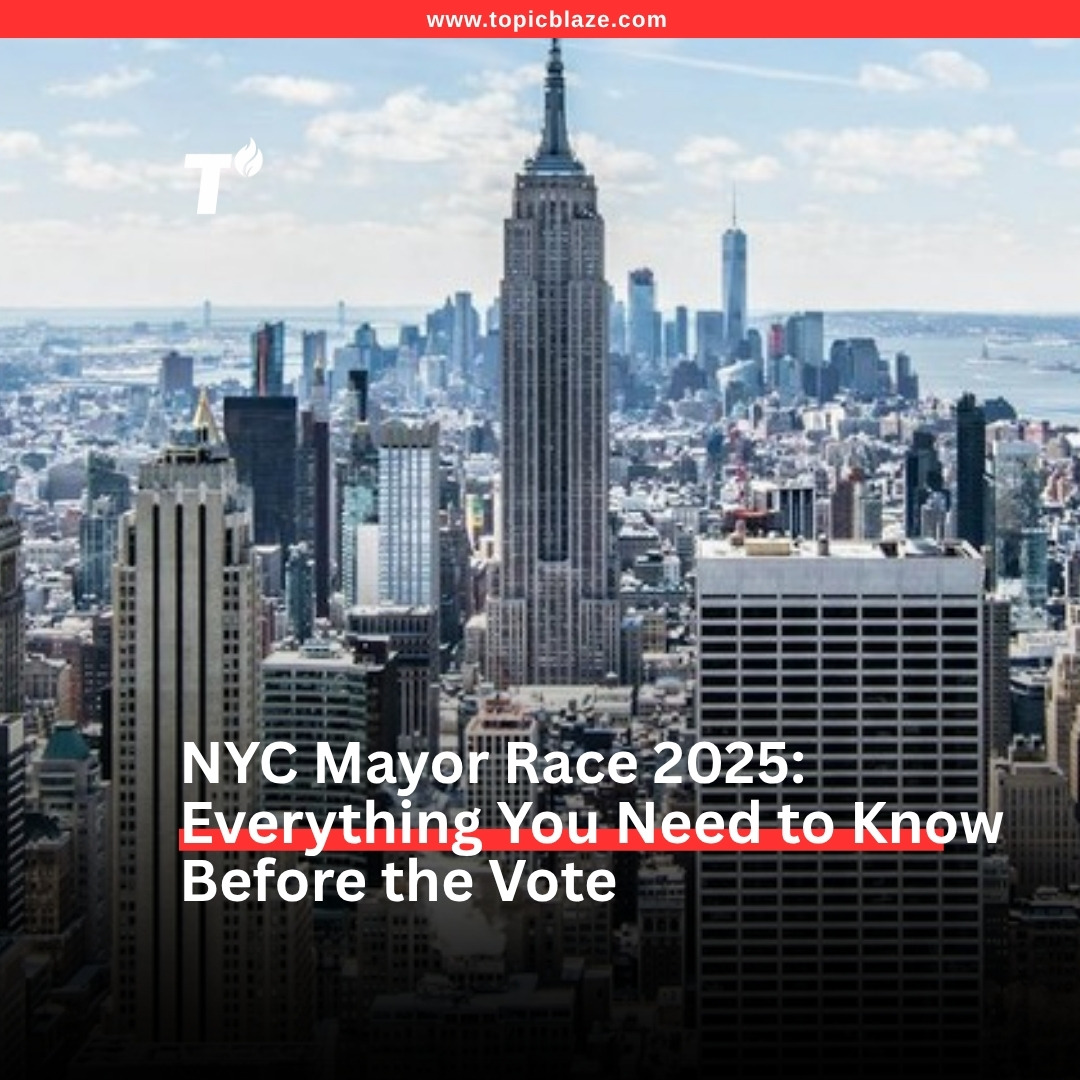
New York City’s Democratic mayoral primary — which effectively decides the next mayor in a city where registered Democrats outnumber Republicans seven to one — is less than eight weeks away, and a new Quinnipiac University poll released Wednesday shows a genuinely competitive four-way race for the first time since the campaign began. City Comptroller Brad Lander leads with 26%, followed by former federal housing secretary Adrienne Adams at 23%, Brooklyn Borough President Antonio Reynoso at 19%, and progressive firebrand Zohran Mamdani at 16% — with 12% still undecided in a race that could easily be decided by turnout and late momentum.
The Key Issues Dividing the Field
The race has crystallised around three defining fault lines. The first is crime and public safety: Adams and Reynoso have aligned themselves with a more enforcement-oriented approach, calling for sustained investment in NYPD neighbourhood policing and opposing calls to cut the department’s $5.8 billion budget. Lander and Mamdani have staked out more progressive ground, emphasising mental health diversion programmes, reducing low-level enforcement, and redirecting a portion of the NYPD budget to social services. The second fault line is housing: all four candidates support accelerating affordable unit construction, but differ sharply on how — Lander backs mandatory inclusionary zoning, Reynoso wants to eliminate community board veto power over new development, and Adams has focused on converting underutilised office towers in Midtown into residential units. The third is the city’s fiscal health: facing a projected $4.2 billion budget gap for FY2027, candidates are being pressed on whether they would raise the city’s personal income tax on high earners or implement across-the-board spending cuts.
“This is the most consequential New York City mayoral race in a decade. Whoever wins inherits a city that is genuinely at a crossroads — on affordability, on public safety, on fiscal sustainability. The next mayor will define New York for the next generation.”
— Dr. Christina Greer, Political Scientist, Fordham University
The shadow of current Mayor Eric Adams looms large over the race. His federal corruption indictment and subsequent deal with the Justice Department have severely damaged public trust in City Hall, and every candidate is running explicitly against his legacy. Voter turnout in the June 24 primary is expected to be critical: historical turnout in NYC Democratic primaries is typically 18–24%, and the candidate best able to mobilise their base — rather than win over undecided voters — is widely expected to prevail. Mamdani’s campaign in particular has generated significant grass-roots energy in neighbourhoods like Jackson Heights, Sunset Park, and the South Bronx, with organisers claiming over 40,000 doors knocked in the past 30 days.
The ranked-choice voting system — used in NYC Democratic primaries since 2021 — adds a further layer of complexity. Voters can rank up to five candidates in order of preference, meaning the winner will likely be decided not just by first-choice support but by which candidate is seen as the acceptable second or third choice of voters whose preferred candidate finishes outside the top two. Polling on ranked-choice preferences currently shows Lander as the most broadly acceptable second choice, while Mamdani — who inspires strong loyalty but also strong opposition — is least likely to benefit from rank-choice transfers.
What This Means For You
If you’re a New York City resident, the June 24 primary is your most consequential vote of the year — more impactful on your daily life than most federal elections. The next mayor will control the NYPD, set school policy, negotiate the MTA operating budget, and determine how aggressively the city pursues housing development in your neighbourhood. If you’re registered Democrat, check your polling location early (NYC often moves polling sites) and understand how ranked-choice voting works before you arrive. If you’re watching from outside the city, this race is a leading indicator of where the national Democratic Party is heading in 2027 and beyond.