














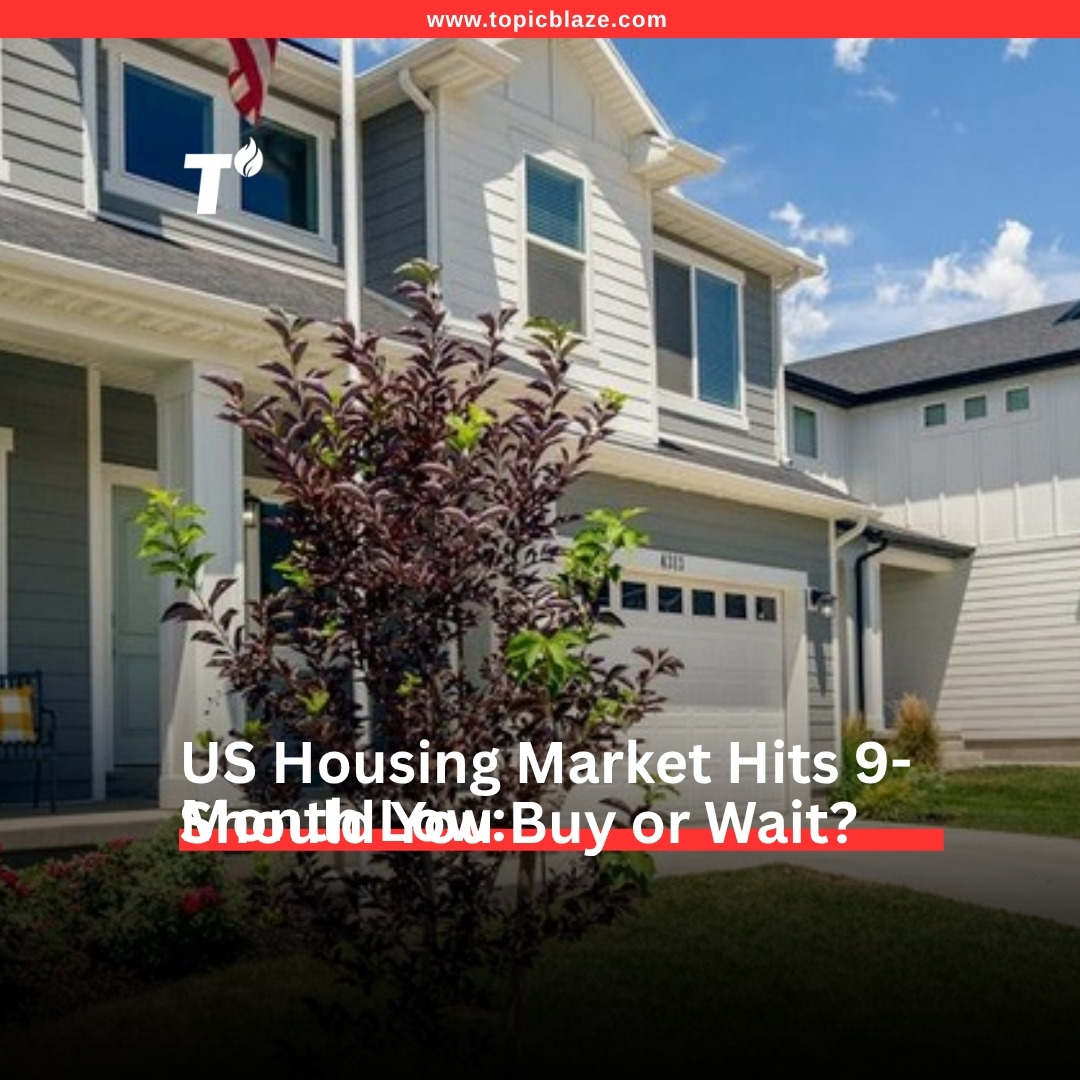
Sales of existing US homes fell to their lowest level since July 2024 in March 2026, dropping 4.9% month-over-month to a seasonally adjusted annual rate of 3.84 million units, according to data released Thursday by the National Association of Realtors. The figure marked the ninth consecutive month of declining or flat sales, with affordability constraints, high mortgage rates, and a persistent shortage of entry-level inventory continuing to price out first-time buyers at record rates.
Why the Market Is Stuck
The central problem remains what economists call the “lock-in effect”: homeowners who refinanced at 2.5–3% during 2020–2021 are deeply reluctant to sell and take on a new mortgage at today’s 6.7–6.9% rates, creating a structural inventory shortage that keeps prices elevated even as demand weakens. The median existing-home price rose 3.8% year-over-year to $403,700 — the 21st consecutive month of annual price gains — even as the volume of sales collapsed. New construction has partially filled the gap, but builders have shifted focus to the upper-mid market ($400,000–$600,000), leaving the sub-$300,000 segment critically undersupplied. NAR chief economist Lawrence Yun noted that first-time buyers accounted for just 24% of purchases in March — well below the historical norm of 38–40%.
“We have a market that’s frozen at the top and priced out at the bottom. Until rates come down meaningfully or we see a genuine surge in new entry-level supply, transaction volume is going to stay depressed regardless of demand.”
— Daryl Fairweather, Chief Economist, Redfin
Regional performance varied sharply. The South — which had been the most resilient market through 2024 — posted the steepest decline, down 6.3% month-over-month, as insurance costs in Florida, Texas, and Louisiana have added $300–500 per month to the effective cost of homeownership. The Northeast bucked the trend, with sales up 1.2%, driven by continued migration into secondary cities like Providence, Hartford, and Albany from high-cost metros. The West remained the most distressed region by affordability metrics, with the median home price in California still above $800,000 despite a 7% drop from the 2022 peak.
The Federal Reserve’s rate path will be decisive for the housing market‘s trajectory. Markets are now pricing roughly two rate cuts in 2026 — which would bring 30-year fixed mortgage rates to approximately 6.3–6.5% by year-end — a meaningful improvement but still well above the historical level where housing activity typically rebounds strongly. Most housing economists do not expect a significant pickup in sales volume until rates sustainably fall below 6%.
What This Means For You
If you’re a prospective buyer sitting on the sidelines, patience may be rewarded: more inventory is slowly coming to market, and mortgage rates are expected to dip to 6.3–6.5% by late 2026. If you’re a seller, price your home realistically from day one — homes that sit more than 30 days are seeing average price cuts of 4–6%. For renters, the silver lining is that asking rents in major markets have softened 2–4% from their 2025 highs as would-be buyers stay in rental housing longer.