













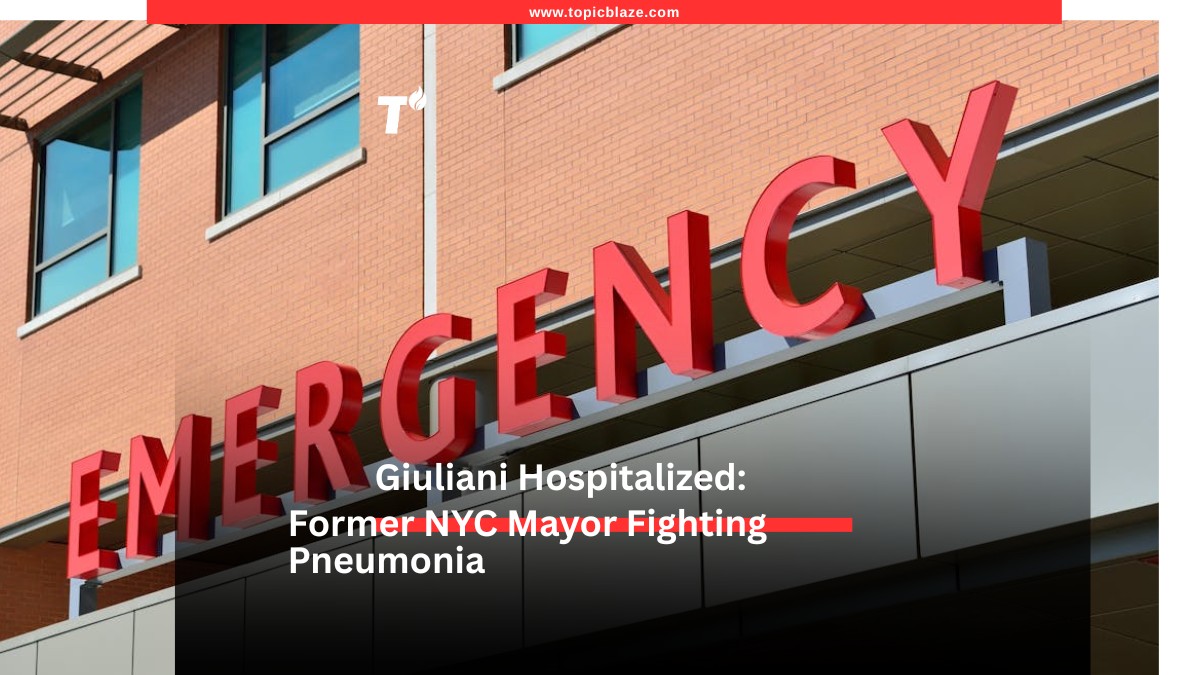
Former New York City Mayor Rudy Giuliani, 81, was hospitalized in critical but stable condition in Florida after being diagnosed with pneumonia, his spokesperson announced Sunday. Giuliani required mechanical ventilation to maintain oxygen levels before stabilizing, according to Ted Goodman, his longtime spokesman, who said the former mayor is now breathing on his own “with his family and primary medical provider at his side.” The hospitalization marks the most serious health crisis for one of America’s most prominent political figures, a man who served as Trump’s personal attorney and led New York City through the September 11 attacks.
What Led to Giuliani’s Hospitalization?
According to Goodman, Giuliani had been “under the weather” in the days before his admission, noting on his online show “America’s Mayor Live” on Friday evening that his voice sounded different. His spokesman attributed the severity of the pneumonia to a pre-existing condition: restrictive airway disease, which Giuliani developed following his extensive time at Ground Zero after the September 11, 2001 terrorist attacks. That chronic lung condition significantly “complicates any respiratory illness” by reducing his ability to fight viral infections effectively and can cause rapid deterioration when pneumonia takes hold.
Giuliani was rushed to a Florida hospital — which his spokesperson declined to identify publicly — on Sunday, May 3. By Monday morning, Goodman confirmed the mechanical ventilation had been removed and Giuliani was breathing independently, though he remained in the ICU and in critical status.
“Rudy Giuliani developed restrictive airway disease from the toxic exposure at Ground Zero. That’s not a minor complication — for someone with his level of respiratory compromise, a severe viral pneumonia can escalate to life-threatening status within 48 to 72 hours without intervention.”
— Dr. Albert Rizzo, Chief Medical Officer, American Lung Association
News of the hospitalization drew an outpouring of reaction across the political spectrum. President Trump posted on Truth Social that he was “praying for a full recovery for a great mayor and great American.” Former President Obama’s office wished Giuliani “a swift recovery.” New York City Mayor Eric Adams called Giuliani “a legend of New York City, who served this city with distinction during its darkest hour” and asked New Yorkers to keep him in their thoughts.
Who Is Rudy Giuliani and Why Does This Matter?
Giuliani served two terms as Mayor of New York City from 1994 to 2001, earning national recognition for his crime reduction policies and his leadership after the September 11 attacks, when he was widely praised as “America’s Mayor.” He subsequently became a prominent legal and political adviser to Donald Trump, serving as personal attorney during Trump’s first term and becoming a central figure in disputes over the 2020 election results. In recent years, Giuliani faced significant legal and financial difficulties, including a $148 million defamation judgment related to false claims about Georgia election workers.
Despite his legal troubles, Giuliani had continued broadcasting his online show from Palm Beach, Florida. His health has been a subject of concern among those close to him since the defamation judgment and subsequent financial pressures, which required the sale of his Manhattan apartment. The pneumonia hospitalization, compounded by his pre-existing 9/11 respiratory condition, represents a genuine medical emergency for a figure who remains highly recognizable in American public life.
What Is Giuliani’s Current Prognosis?
Medical experts note that pneumonia in patients with restrictive airway disease in their 80s carries a higher mortality risk than in younger, healthier patients, but the removal of mechanical ventilation within 24 hours of admission is generally considered a positive sign. ICU care for bacterial or viral pneumonia in elderly patients typically involves IV antibiotics, oxygen therapy, and close monitoring for complications including sepsis or secondary infections. Goodman said Giuliani’s family and doctors are “cautiously optimistic” and asked for “prayers and privacy.”
This development comes amid intense political activity in Washington. The FCC’s ongoing controversy over broadcast licenses and the broader tensions of the Iran-Hormuz conflict are dominating the news cycle, but Giuliani’s hospitalization has broken through nationally, reflecting the enduring public interest in one of America’s most polarizing political figures.

What This Means For You
Giuliani’s case is a sobering reminder of a health risk affecting millions of Americans over 65: the danger of respiratory illness compounded by pre-existing lung conditions. Restrictive airway disease and COPD affect an estimated 16 million Americans, and the combination of an aging immune system and damaged lung tissue makes pneumonia significantly more dangerous than the average patient might expect. The CDC recommends staying current on pneumococcal and annual influenza vaccines, which together reduce the risk of serious pneumonia complications by 40–60 percent. Giuliani’s situation is also a reminder that Ground Zero first responders and volunteers — many now in their late 60s, 70s, and 80s — continue to face serious long-term health consequences from toxic exposure on September 11.
Sources
- ABC News — Rudy Giuliani hospitalized in critical condition
- NBC News — Rudy Giuliani recovering from pneumonia, critical but stable
- CNBC — Rudy Giuliani in critical condition with pneumonia