
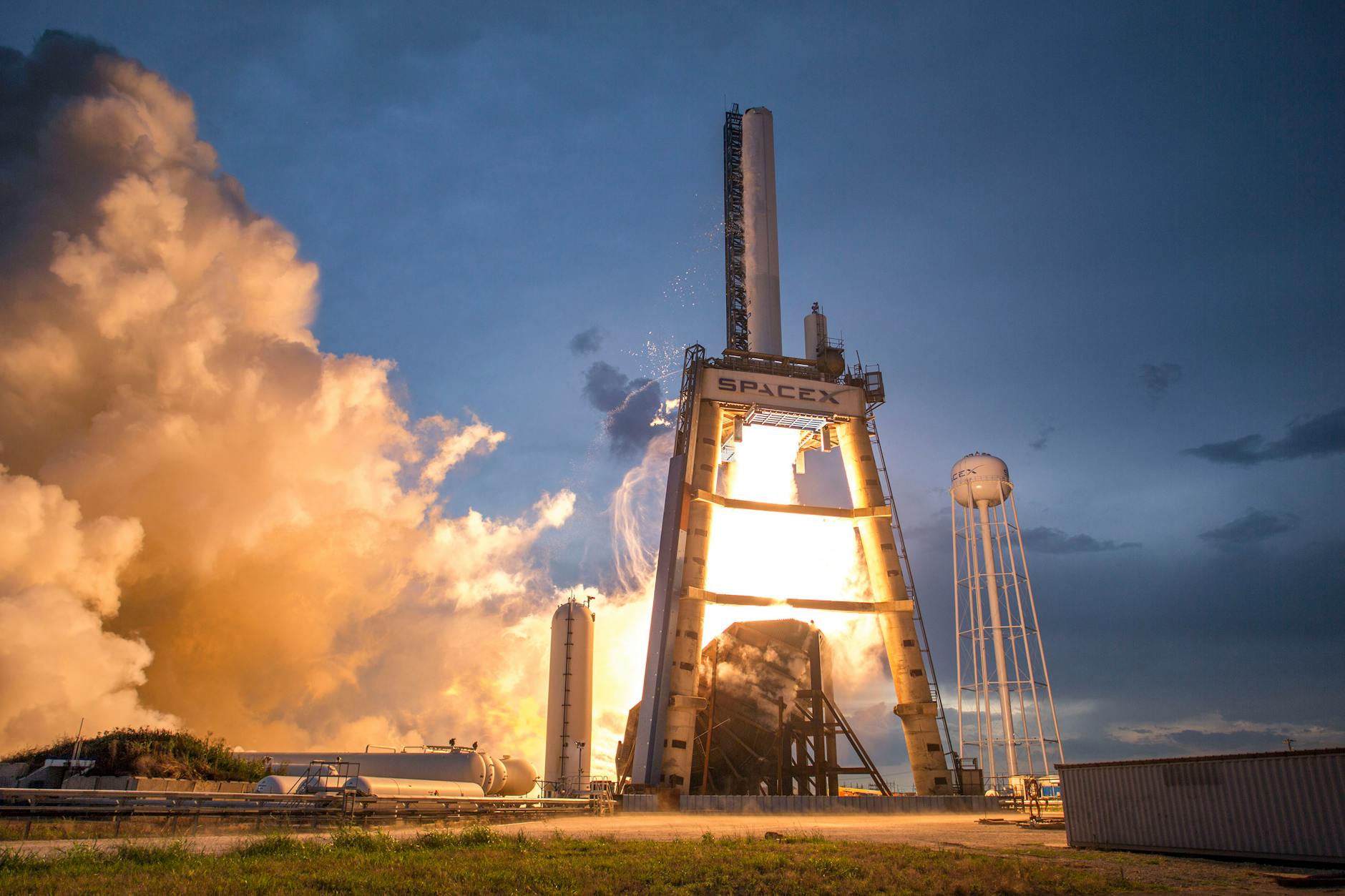
CAPE CANAVERAL, Florida — In a defining moment for human spaceflight, NASA’s Space Launch System (SLS) rocket roared to life on Wednesday, April 2, 2026, launching four astronauts on a historic 10-day mission around the Moon — the first time humans have ventured beyond low Earth orbit in more than half a century.
The Orion spacecraft, carrying NASA Commander Reid Wiseman, Pilot Victor Glover, Mission Specialist Christina Koch, and Canadian Space Agency Mission Specialist Jeremy Hansen, lifted off from Launch Complex 39B at Kennedy Space Center in Florida at 6:35 p.m. EDT, drawing cheers from thousands of spectators gathered along the beaches and roadways surrounding the launch site.
A Mission of Historic Firsts
Artemis II is not just another spaceflight. Within hours of liftoff, it had already made history in multiple ways. Victor Glover became the first person of color to travel beyond low Earth orbit. Christina Koch became the first woman to journey toward the Moon. Commander Reid Wiseman became the oldest person ever to venture beyond low Earth orbit. And Jeremy Hansen made history as the first non-American citizen to travel beyond Earth’s orbit.
“This is a day that will be written in the history books,” said NASA Administrator Bill Nelson at a post-launch press conference. “These four heroes are not just representing America — they are representing all of humanity’s desire to explore, to push further, and to reach beyond what we thought possible.”
“We are going back to the Moon. But this time, we are going for good.” — NASA Administrator Bill Nelson
What Happens During the 10-Day Mission?
Unlike the Apollo missions, Artemis II is a free-return flyby mission — meaning the astronauts will not land on the Moon. Instead, Orion will use the Moon’s gravitational pull to swing around it and return safely to Earth. The mission serves as a critical test of the Orion spacecraft’s life support systems, navigation, and deep-space communication capabilities before NASA attempts an actual Moon landing with Artemis III.
- Days 1–3: Orion performs engine burns to escape Earth’s orbit and begin its transit toward the Moon
- Day 4 (April 6): Lunar flyby — the crew will pass within approximately 4,700 miles of the Moon’s surface
- Days 5–9: Return journey to Earth
- Day 10 (April 10): Atmospheric reentry and splashdown in the Pacific Ocean
The Crew: Who Are the Artemis II Astronauts?
Commander Reid Wiseman is a Navy test pilot and veteran NASA astronaut who previously spent 165 days aboard the International Space Station. Pilot Victor Glover is also a Navy pilot who served on the historic SpaceX Crew Dragon Demo-2 mission in 2020. Christina Koch holds the world record for the longest single spaceflight by a woman, having spent 328 consecutive days aboard the ISS. Jeremy Hansen is a Canadian Armed Forces colonel and fighter pilot who joined the Canadian Space Agency in 2009.
Why Artemis II Matters for the Future of Space Exploration
Artemis II is the first crewed mission of the Orion spacecraft and the second flight of the Space Launch System — the most powerful rocket ever built. The data gathered during this mission will directly inform the planning of Artemis III, which aims to land the first woman and first person of color on the lunar surface, potentially as early as 2027.
The Artemis program represents a fundamental shift in how NASA approaches space exploration, built around a model of international cooperation and commercial partnership alongside the European Space Agency, Canadian Space Agency, and commercial partners like SpaceX and Boeing.
Public Reaction: A World Watches in Awe
The launch drew millions of viewers around the world, with hashtags like #Artemis2 and #WeAreGoingToTheMoon trending across the United States, United Kingdom, and Canada. NASA reported record viewership on its livestream — over 15 million viewers tuning in across its YouTube channel and NASA+.
The crew is expected to splash down in the Pacific Ocean on Friday, April 10, 2026. For now, four brave astronauts are hurtling through the darkness of deep space, carrying with them the hopes and dreams of a species that has always looked up at the Moon and wondered: what if we could go there again?
It turns out — we can.